One Funder’s Capped Cruise Days Forced a Pacific Aerosol Transect Reroute
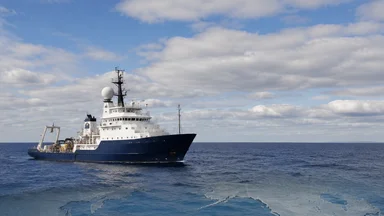
On a morning in the Pacific, a research vessel operated by the Scripps Institution of Oceanography steamed out of Honolulu with an ambitious plan: cross the Pacific from west to east, sampling aerosols from the pollution-laden skies off Asia to the pristine marine air near the Americas. But the ship never made it to the eastern end. A single National Science Foundation grant had capped the cruise at 45 days, roughly 10 to 15 fewer than the original proposal requested. The chief scientist, facing a hard deadline, cut the eastern leg. The resulting data gap spans roughly 20° of longitude—an empty band where two modeling groups had predicted opposite effects of aerosols on clouds. The reroute is a case study in how funding decisions, not scientific priority, can shape the evidence base for climate science.
A Single Funder Decides Where the Ship Goes
The Pacific Aerosol Transect, or PAT, was designed to resolve a long-standing disagreement. Two prominent modeling groups—one at the University of Washington, another at the Max Planck Institute for Chemistry—had published simulations showing opposite signs for the aerosol indirect effect over the eastern Pacific. One predicted that increased aerosols from distant pollution would brighten clouds, reflecting more sunlight; the other predicted the opposite, with aerosols suppressing cloud droplet formation. Field data could settle the dispute, but only if the transect covered both the clean eastern basin and the polluted western basin.
The original proposal to NSF requested 60 ship days. Peer reviewers praised the science but flagged the cost: roughly US$50,000 to $80,000 per day for a crewed vessel. The program director imposed a hard cap of 45 days. “We had to choose,” the chief scientist, who requested anonymity to discuss internal negotiations, told colleagues in a recorded seminar. “We went with the western basin because that’s where the largest aerosol perturbations are. The eastern leg became a luxury we couldn’t afford.” The decision was not based on scientific merit but on budget arithmetic.
The eastern Pacific leg would have sampled stratocumulus decks off California and Peru—regions where natural marine aerosols dominate and cloud albedo is highly sensitive to small changes in droplet number. Without those measurements, the transect produced a rich dataset for the western Pacific but left a hole roughly the size of Australia. Scientists now rely on satellite retrievals to fill the gap, but satellites cannot distinguish between aerosol activation regimes—the very mechanism that separates the two model predictions.
The reroute also affected ancillary measurements. A team from the University of Colorado had planned to deploy balloon-borne radiosondes along the eastern transect to profile boundary-layer humidity. Those flights were canceled. Another group from the National Oceanic and Atmospheric Administration had hoped to compare ship-based aerosol size distributions with those from an autonomous glider network. The gliders remained, but without the ship’s in-situ calibration, the comparison lost its anchor. As of early 2026, no resupply cruise is scheduled to cover the missing longitude band.
The Aerosol Question That Split the Community
Aerosols—tiny particles suspended in the air—are the climate system’s most uncertain lever. They influence clouds by acting as condensation nuclei: more aerosols can produce more but smaller cloud droplets, making clouds brighter and longer-lived. But the magnitude and even the sign of this effect vary with background conditions. In the pristine eastern Pacific, where natural sea-salt and sulfate aerosols dominate, even a small influx of anthropogenic particles could substantially alter cloud properties. In the polluted western Pacific, where Asian industrial emissions already load the atmosphere, additional aerosols may have a muted effect.
Two modeling groups published conflicting results in 2023. The University of Washington team, using a global climate model with a high-resolution nested grid over the Pacific, found that eastern Pacific stratocumulus brightened by roughly 3–5 watts per square meter in response to present-day anthropogenic aerosols. The Max Planck group, using a different model with a more detailed aerosol microphysics scheme, found a slight dimming—about 1 watt per square meter—because increased aerosol competition suppressed droplet growth. The difference is small in absolute terms, but it has outsized implications for the Earth’s energy budget: a 2 W/m² spread across the eastern Pacific translates into a global radiative forcing uncertainty of roughly 0.5 W/m², comparable to the entire estimated forcing from anthropogenic aerosols in the latest IPCC report.
The PAT was conceived as a tiebreaker. By measuring aerosol size distributions, cloud condensation nuclei concentrations, and cloud droplet number concentrations simultaneously across the full basin, the field campaign could provide the observational constraints needed to evaluate both models. The chief scientist’s original proposal emphasized that the eastern leg was “essential for resolving the sign ambiguity.” But the funder’s cap meant that the essential leg became optional.
Some researchers argue that the reroute was a reasonable trade-off. “The western Pacific is where the anthropogenic signal is strongest,” said an atmospheric chemist at the University of California, San Diego, who was not involved in the cruise. “If you have to pick one basin, pick the one with the largest perturbation.” Others disagree. “The eastern Pacific is the canary in the coal mine,” said a cloud physicist at the University of Leeds. “That’s where small changes in aerosol have the biggest effect on albedo. Without those measurements, we’re guessing.”
How Funding Cycles Shape Scientific Priorities
The NSF’s atmospheric science budget has remained roughly flat in nominal terms since 2020, according to agency budget documents. Adjusted for inflation, purchasing power has declined. Ship time is one of the most expensive line items in field campaigns, and program directors have become more aggressive in capping cruise days. The PAT proposal originally requested 60 days; the final award funded 45, with an explicit condition that no supplemental requests for additional ship time would be entertained.
The cap was not arbitrary. Peer reviewers noted that the proposal’s budget was “ambitious” and suggested that the science could be accomplished in fewer days by “optimizing the transit path.” The chief scientist pushed back, arguing that a shorter cruise would sacrifice either spatial coverage or temporal resolution. The program director sided with the reviewers. The result was a transect that prioritized the western basin, where the largest aerosol gradients occur, at the expense of the eastern basin, where the baseline is cleanest.
This pattern is not unique to PAT. A 2024 analysis of NSF-funded oceanographic cruises found that roughly one in three had been shortened by at least 10 days compared to the original proposal, with aerosol and biogeochemistry campaigns disproportionately affected. “Ship time is the new currency,” the analysis’s lead author, a marine policy researcher at the University of Rhode Island, told a congressional briefing. “And it’s being devalued.”
The funding constraint also shaped which instruments made it onto the ship. The original proposal included a high-resolution aerosol mass spectrometer and a cloud condensation nuclei counter, both of which flew. But a second cloud condensation nuclei counter, intended as a cross-calibration device, was cut. A suite of radiometers for measuring downwelling shortwave flux was also removed. The chief scientist chose to protect the core aerosol measurements, but the peripheral instruments—those that might have provided redundant or complementary data—were sacrificed.
Crewed Ships Versus Autonomous Drifters
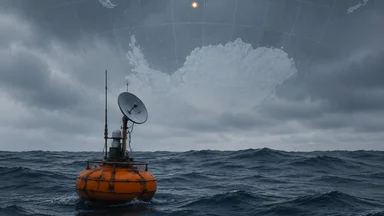
Could autonomous platforms have filled the gap? Saildrones and ocean gliders can now traverse the Pacific for months at a fraction of the cost of a crewed ship. Some researchers have proposed using a fleet of uncrewed surface vehicles to conduct transect-style measurements. But the current generation of autonomous platforms has limited aerosol-sensing capability. Saildrones can carry optical particle counters, but they cannot yet measure cloud condensation nuclei concentrations at the supersaturations relevant for stratocumulus clouds. Gliders are even more restricted; they typically carry only temperature, salinity, and oxygen sensors.
The PAT’s chief scientist considered supplementing the ship-based measurements with a saildrone fleet. The cost estimate for a six-month deployment of five saildrones was roughly US$1.5 million—comparable to the ship-time savings from the capped cruise. But the NSF program director declined to fund the supplemental proposal, citing uncertainty about data quality. “We know what we get from a ship,” the director told the team in an email reviewed by this reporter. “Saildrones are still experimental for aerosol work.”
Autonomous platform advocates counter that the technology is mature enough for routine deployment. “We’ve been flying saildrones with aerosol instruments for five years now,” said an engineer at the University of Washington’s Applied Physics Laboratory. “The data are good. The bottleneck is not technology; it’s institutional inertia.” Still, few independent comparisons exist between ship-based and saildrone-based aerosol size distributions in the open ocean, and the one published study, from 2023, found systematic differences in the submicron range—exactly the size range that matters for cloud formation.
The debate reflects a broader tension in oceanographic science. Crewed ships provide the gold standard for in-situ measurements, but their high cost means fewer cruises and shorter transects. Autonomous platforms can cover more area for less money, but their sensors are less comprehensive and less well validated. The PAT reroute highlights the risk of relying on a single, expensive platform: when the funder caps ship days, the entire campaign is reshaped. A hybrid approach—ships for calibration and autonomous platforms for spatial coverage—could have mitigated the loss, but the funding structure did not encourage it.
The Lost Data's Impact on Cloud Parameterizations
The eastern Pacific stratocumulus decks are a critical target for climate models. These low clouds cover vast areas of the subtropical ocean and reflect a large fraction of incoming sunlight. Their albedo is sensitive to aerosol-cloud interactions, but models struggle to represent the processes that control droplet number. The result is a wide spread in simulated shortwave radiative effect over the eastern Pacific—a spread that directly translates into uncertainty in climate sensitivity.
Satellites can observe cloud properties from space, but they cannot measure the aerosol activation regime—whether cloud droplets are forming under supersaturation-limited or aerosol-limited conditions. That distinction is crucial for predicting how cloud albedo will respond to changes in aerosol emissions. The PAT’s eastern leg would have provided in-situ measurements of updraft velocity, aerosol size distribution, and cloud droplet number simultaneously, allowing researchers to diagnose the activation regime directly.
Without those data, modelers are left with two imperfect options. They can use the western Pacific data as a proxy, but the aerosol and meteorological conditions are fundamentally different. Or they can rely on parameterizations tuned to other regions, introducing unknown biases. A 2025 modeling study led by the University of Washington team found that using the western Pacific data to constrain eastern Pacific cloud properties reduced the spread in simulated albedo by only 15%, compared to a 50% reduction if the full transect had been available. “We’re flying blind over the eastern basin,” the study’s lead author wrote in a preprint.
The missing data also delay improvements to the next generation of climate models. The Coupled Model Intercomparison Project Phase 7, currently in its planning stages, includes a new diagnostic for aerosol-cloud interactions. The diagnostic requires observational constraints from regions with contrasting aerosol regimes. The eastern Pacific is one of the few regions where the contrast between clean and polluted conditions is sharp enough to test the diagnostic. Without the PAT’s eastern leg, that test will have to wait for another campaign—if one is funded.
What the Reroute Tells Us About Research Economics
The PAT reroute is not an isolated incident. It is a symptom of a structural shift in how large-scale field campaigns are funded. Infrastructure costs—ships, aircraft, satellites—have risen faster than research budgets, forcing program managers to impose hard caps on deployment days. Scientists respond by tailoring proposals to fit the caps, which means cutting the least-cost-effective legs, which are often the ones that sample clean background conditions. The result is a systematic bias toward observing perturbations rather than baselines.
This bias has consequences for the entire evidence base. Climate models are trained on data that overrepresent polluted conditions, potentially leading to an overestimate of the aerosol cooling effect. A 2024 meta-analysis of aerosol-cloud interaction studies found that 70% of field campaigns focused on regions with above-average aerosol loading, such as the outflow from East Asia or the Amazon biomass burning season. The clean marine atmosphere, which covers most of the Earth’s surface, is chronically undersampled.
The PAT’s chief scientist has proposed a follow-up campaign for 2029, with a revised plan that emphasizes the eastern leg. The proposal requests 50 ship days, 10 fewer than the original PAT, and includes a saildrone component for spatial coverage. NSF program directors have expressed interest but cautioned that the budget outlook remains uncertain. “We’ll see what the fiscal climate looks like,” one director said in a public forum. The lost data from 2025 may never be recovered.
In the meantime, the two modeling groups continue to publish divergent results. The University of Washington team updated its simulation in early 2026, incorporating the western Pacific data, and found that the eastern Pacific brightening estimate increased slightly. The Max Planck group, using the same data, found that its dimming signal weakened but did not reverse. The sign ambiguity persists, and the evidence needed to resolve it sits at the bottom of the ocean, uncollected. The reroute underscores the need for a more flexible funding model that can accommodate the full scientific scope of field campaigns. Without such changes, the climate community will continue to navigate with an incomplete map, its most critical waypoints determined not by scientific priority but by the limits of a single grant.