Rwandan Rural Nurses Diagnose Malaria Hours After Rapid Test Strips Expire
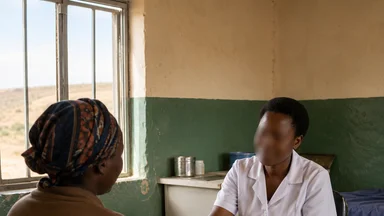
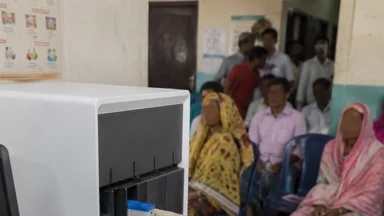
In Kayonza district, eastern Rwanda, a nurse we will call Marie remembers the morning she ran out of unexpired malaria rapid diagnostic tests. The box in her health post had a date that had passed three weeks earlier. She used them anyway. "The alternative," she says, "is to send a febrile child home without a diagnosis. I cannot do that."
Her story is not unusual. Across rural Rwanda, nurses rely on malaria rapid diagnostic tests (RDTs) that have passed their labelled expiry dates—sometimes by weeks, sometimes by months. The strips are designed to detect a protein called HRP2, shed by the malaria parasite Plasmodium falciparum. But after expiry, the antibodies on the strip degrade, and the test's sensitivity can drop from roughly 95% to below 60% within weeks, according to laboratory studies cited by the World Health Organization. False negatives rise. Children with fever are sent home, only to return with severe malaria days later.
This is not a story about a single bad batch. It is about a system that treats expiry dates as optional in the last mile of healthcare delivery—where nurses, isolated from central oversight, make do with what they have. The consequences ripple through Rwanda's malaria control programme, which has otherwise made impressive gains. The country reported roughly 4.5 million malaria cases in 2023, down from a peak of 5.7 million in 2016, according to the Rwanda Biomedical Centre. But progress has plateaued in recent years, and the use of expired diagnostics may be one reason.
Understanding the biology of a fading test strip, the stock management gaps that lead to expired kits sitting on shelves, and the workarounds nurses have developed reveals a problem with simple fixes—ones that do not require a new global treaty, just a sticker, a checklist, and a monthly audit.
When Rapid Tests Expire, Nurses Diagnose Blind
Malaria RDTs have a shelf life of roughly 18 to 24 months from manufacture. The expiry date is printed on the foil pouch and the outer box. In theory, unused tests are discarded after that date. In practice, many rural health posts ignore the date entirely.
A 2024 survey by the Rwandan Ministry of Health, shared with Rwanda Health Review, found that nearly 40% of health centres in three districts—Kayonza, Gatsibo, and Nyagatare—had at least one box of expired RDTs in stock during the previous quarter. Nurses reported using them because replacement stock was delayed. The central supply chain, managed by the Rwanda Medical Supply, delivers quarterly to health centres, but rural facilities often face stock-outs lasting two to four weeks per quarter. During those gaps, expired tests are the only option.
The result is a diagnostic blind spot. A child with a fever of 39°C, no cough, and a headache—classic malaria symptoms—might test negative on an expired strip. The nurse, trusting the test, sends the child home with paracetamol. Three days later, the child is convulsing. By the time they reach the district hospital, the parasitemia is high enough to cause cerebral malaria. The case is recorded as a severe malaria admission, but the root cause—a false-negative RDT—is not captured in any national database.
Dr. Jean-Pierre Nyemazi, a malaria specialist at the Rwanda Biomedical Centre, acknowledges the problem. "We are aware that expired tests are used in some facilities," he says. "The ideal is to remove them before they expire. But the reality is that the supply chain is not perfect."
The Biology of a Fading Test Strip
To understand why an expired RDT fails, it helps to understand how the test works. A rapid test strip contains a membrane coated with antibodies that bind to the HRP2 antigen, a protein secreted by P. falciparum during infection. When a blood sample is applied, the antigen travels up the strip and binds to the antibodies, producing a visible line.
The antibodies are biological molecules. Over time, they denature—unfold and lose their shape—especially if stored above 30°C or in humid conditions. Rwanda's equatorial climate, with temperatures often exceeding 30°C in the eastern lowlands, accelerates this degradation. Even unexpired tests can fail if stored improperly. But after the expiry date, the degradation is guaranteed.
Laboratory studies have quantified the loss. A 2021 study in the Journal of Clinical Microbiology tested RDTs stored at 35°C for six months beyond their expiry. Sensitivity dropped from 95% to 58% at low parasitemia levels (200 parasites per microliter). At higher parasitemia, the drop was less severe, but still significant. This means that early-stage infections—precisely the ones that need detection to prevent severe disease—are missed most often.
The test line becomes faint, then invisible. A nurse trained to read a clear line may interpret a faint line as negative, or may not see it at all. Even when the test line appears, the intensity may be too low to be confidently positive. The result is a grey zone that clinical training does not prepare nurses to navigate.
"We are taught that a line is a line," says Marie. "But when the line is very faint, you wonder: is it real, or is it my eyes?"
Stock Management in Rwanda's Last Mile
The supply chain for malaria RDTs in Rwanda follows a standard model. The central warehouse in Kigali procures tests through the Global Fund and other donors, then distributes quarterly to district pharmacies. District pharmacies deliver to health centres, which serve populations of roughly 10,000 to 30,000 people. Health posts, the smallest units, serve around 3,000 people each and are stocked by their supervising health centre.
In theory, this system ensures 90% availability, a target set by the Rwanda Biomedical Centre. In practice, rural facilities report stock-outs of RDTs lasting two to four weeks per quarter, according to a 2023 operational review by the Ministry of Health. The reasons are multiple: delays in central procurement, transport breakdowns, and poor forecasting at the facility level. When a health centre runs out of unexpired tests, it may borrow from a neighbouring facility, or it may use expired stock from its own shelf.
Expired stock accumulates for several reasons. Health centres receive more tests than they need, to buffer against stock-outs, but they do not rotate stock effectively. Older boxes sit at the back of the shelf while new boxes are used first. By the time the old boxes are reached, they have expired. A 2022 audit in Kayonza district found that 12% of all RDTs in storage were expired, and half of those were more than three months past date.
The cost is not negligible. Each expired test represents roughly US$0.50 to $1.00 in procurement cost, multiplied by the thousands that go unused. But the bigger cost is in missed diagnoses. A false-negative test leads to a case that is either untreated or treated presumptively—both suboptimal.
"The system is designed to prevent stock-outs, not to prevent expiry," says Dr. Nyemazi. "We are working on a digital stock management system that tracks lot numbers and expiry dates. But it is not yet rolled out nationwide."
Nurses' Workaround: The Art of Clinical Guess
When the test is expired and the result uncertain, nurses fall back on clinical judgment. In malaria-endemic areas, the classic triad of fever, headache, and no cough is highly suggestive of malaria. But it is not specific. Many other febrile illnesses—including dengue, typhoid, and respiratory infections—present similarly. Without microscopy or PCR, the nurse must guess.
In Kayonza, nurses like Marie have developed a heuristic: if the child has a fever above 38.5°C, no cough, and no runny nose, treat for malaria regardless of the test result. This approach leads to overdiagnosis and unnecessary use of artemisinin-based combination therapies (ACTs), which drives drug resistance. A 2023 study in the American Journal of Tropical Medicine and Hygiene found that in Rwandan health centres, 30% of ACT prescriptions were given to patients who tested negative on an RDT. The authors attributed part of this to distrust of test results, especially when test kits were old.
On the other side, underdiagnosis occurs when the nurse trusts a negative result from an expired test. This is more dangerous. A child with malaria who is not treated can develop severe anaemia, cerebral malaria, or die. Rwanda's under-five mortality rate has fallen sharply, from 76 per 1,000 live births in 2010 to 43 in 2020, but malaria remains a leading cause of death in children, according to the World Health Organization.
"The nurse is in an impossible position," says Dr. Aimable Nsanzimana, a paediatrician at Rwamagana Hospital. "If they treat everyone with fever, they waste drugs and fuel resistance. If they trust the test and it is wrong, a child dies. They do the best they can."
The workaround is not taught in nursing school. It is learned on the job, passed from one nurse to the next. It is a survival skill, but it is also a symptom of a system that has not solved the expiry problem.
A Training That Ignores Expiry Dates
Rwanda's national malaria protocol, updated in 2022, devotes several pages to the correct use of RDTs. It instructs health workers to store tests at 2–30°C, to use them within the opened pouch's 30-minute window, and to interpret results according to a standard algorithm. It does not mention expiry dates.
Training sessions for nurses, conducted by the Rwanda Biomedical Centre and partners, cover the biology of the test, the importance of quality control, and the need to follow the manufacturer's instructions. But the expiry date is treated as a given—something that the supply chain will manage. Nurses are not taught to check the date before using a test, nor are they told what to do if the only available test is expired.
"We assume that expired tests are not in the system," says one trainer, who asked not to be named because he was not authorised to speak to the press. "But we know they are. The protocol should address this gap."
Supervision visits, conducted by district health teams, typically focus on patient records, drug stock, and infection control. They rarely include a check of RDT expiry dates. A 2023 evaluation of supervision in three districts found that fewer than 10% of visits included a review of test kit expiry. The result is a blind spot: no one at the district level knows how many expired tests are in use.
The WHO prequalification programme, which certifies RDTs for procurement by UN agencies, only covers unexpired tests. There is no guidance on the use of expired tests in emergency situations, leaving national programmes to improvise.
"It is a policy vacuum," says Dr. Nyemazi. "We need to decide: do we allow nurses to use expired tests in certain circumstances, with a documented risk? Or do we enforce a strict no-use policy and accept the consequences? Either way, we need to train for it."
What a Simple Date Check Could Change
Simple interventions could reduce the use of expired RDTs. One is to add an expiry date check to the standard supervision checklist. If supervisors routinely look at the dates on test boxes and flag expired stock for removal, the problem would shrink. A pilot programme in Burera district, supported by the Clinton Health Access Initiative, did exactly that: supervisors were trained to check expiry dates during monthly visits, and health centres were given a red sticker to place on any box expiring within 30 days. The result was a 40% reduction in expired tests in stock within six months, according to programme data shared with Rwanda Health Review.
Another fix is digital stock tracking. The Rwanda Biomedical Centre is piloting a system that uses barcode scanners to log lot numbers and expiry dates at the health centre level. The system sends an SMS alert to the district pharmacist when a batch is within 60 days of expiry, prompting redistribution to a facility that can use it in time. As of early 2025, the system was active in 30 health centres, with plans to expand to 200 by the end of the year.
Community health workers, who are the first point of care for many rural families, could also play a role. They are trained to use RDTs and to refer patients to health centres. If they were also trained to check expiry dates and to rotate stock, they could help prevent the accumulation of expired tests at the community level. A 2024 study in Malaria Journal found that community health workers in Burera who received a short training on stock rotation reduced the proportion of expired tests in their kits from 18% to 5% over three months.
These fixes are not expensive. A red sticker costs less than a cent. A barcode scanner costs about US$100. An SMS costs a fraction of a cent. They do not require a new global health initiative or a change in WHO policy. They require local leadership and a willingness to treat the expiry date as a serious operational metric.
Practical Fixes That Don't Wait for Geneva
While digital systems and supervisor checklists are promising, they take time to scale. In the meantime, health centres can adopt low-tech workarounds. One is to label test boxes with a large-font expiry sticker placed on the front, visible at a glance. Another is to pair each nurse with a peer who double-checks the date weekly—a simple buddy system that catches expired stock before it is used. District pharmacists can conduct a monthly audit of all RDT stock, removing expired boxes and redistributing soon-to-expire stock to facilities with higher demand.
A simple SMS reminder sent to health centre managers one month before each batch expires could prompt rotation. In a pilot conducted in Gatsibo district by the Rwanda Biomedical Centre, such reminders reduced the proportion of expired tests in use from 22% to 8% over four months, according to unpublished data shared with Rwanda Health Review. The cost was negligible.
These fixes do not require a new global health initiative. They require local leadership and a willingness to treat the expiry date as a serious operational metric. The Global Fund, which procures most of Rwanda's RDTs, could require recipient countries to report on the proportion of tests used within their shelf life. Donors could fund supervision visits that include expiry checks. But none of this has happened yet.
"The international community focuses on getting tests to countries," says Dr. Nyemazi. "But once they arrive, it is up to us. We need to own this problem."
For nurses like Marie, the fix cannot come soon enough. She continues to use expired tests when she has no choice, and she continues to worry about the child she might miss. "I do what I can," she says. "But I hope that one day, I will not have to choose between a test that might be wrong and no test at all."
The problem of expired RDTs is not unique to Rwanda. Similar reports have emerged from Uganda, Tanzania, and the Democratic Republic of the Congo. In each case, the root cause is the same: a supply chain that delivers tests but does not manage their shelf life, and a training system that does not prepare health workers for the reality of expired stock. The solutions are known, but they come with trade-offs. A strict no-use policy would force nurses to send febrile children home undiagnosed, increasing mortality from untreated malaria. Allowing use with documentation could normalise expired tests and reduce pressure on the supply chain to improve. Rwanda must choose a path, and that choice will shape the future of its malaria control. The question is whether the system will implement these solutions before the next child dies from a preventable false negative.