South African TB Clinics Prescribe Shorter Regimens Months After Guidelines Change
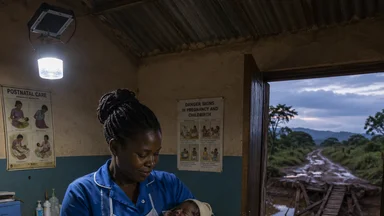
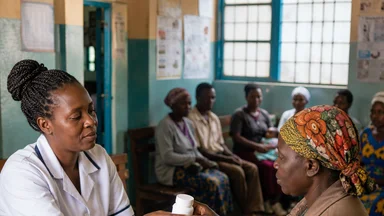
In a crowded clinic in the Eastern Cape, a nurse hands a patient a 28-day supply of rifampin, isoniazid, pyrazinamide, and ethambutol — the same four-drug cocktail that has been the backbone of tuberculosis treatment for decades. The patient will need to return for refills for six months. But since 2022, the World Health Organization has recommended a shorter alternative: a four-month regimen containing rifapentine and moxifloxacin. Evidence from the STREAM stage 2 trial and other studies shows it works as well as the standard course, with fewer patients dropping out. Yet in South Africa, the country with the world's highest TB incidence per capita, adoption has been slow. Clinics still prescribe the longer therapy, citing supply gaps, lack of training, and a deep-seated caution about changing what has worked.
South Africa's TB Burden and the Slow Uptake of Shorter Regimens
South Africa carries an outsized share of the global TB burden. With an estimated incidence of roughly 500 cases per 100,000 people, it ranks first among all countries for TB incidence per capita, according to the WHO Global Tuberculosis Report 2024. The country also has a high rate of HIV co-infection, which complicates treatment and increases mortality. For decades, the standard therapy for drug-susceptible TB has been a six-month regimen: two months of intensive phase with four drugs, followed by four months of continuation phase with two drugs. This regimen cures about 85% of patients in clinical trials, but real-world effectiveness is lower due to defaults and loss to follow-up.
In 2022, the WHO issued a conditional recommendation for a four-month regimen consisting of rifapentine and moxifloxacin, plus isoniazid and pyrazinamide for the first two months, based on evidence from the STREAM stage 2 trial and the TBTC Study 31/A5349 trial. The recommendation was updated in the 2022 WHO consolidated guidelines on tuberculosis. Despite this, as of late 2024, the majority of South African public-sector clinics still prescribe the six-month regimen. A survey conducted by the National TB Programme in early 2025 found that only about 12% of patients with drug-susceptible TB had been started on the shorter regimen, with wide variation across provinces.
The delay matters. Modelling studies suggest that each year of slow adoption could result in thousands of additional TB cases and deaths, as patients default from the longer regimen and continue to transmit the infection. The gap between evidence and practice is not a new phenomenon in global health, but in TB control, where treatment duration is a major driver of adherence, the stakes are especially high.
Several factors explain the slow uptake. Supply chain issues are prominent: rifapentine is not yet procured in sufficient quantities by the National Department of Health. Clinicians report that they have received little training on the new regimen, and some express concern about adverse events, particularly hepatotoxicity, despite trial data showing comparable safety. The WHO recommendation is conditional, meaning the quality of evidence is moderate, and some clinicians prefer to wait for more local data.
The Evidence Behind Shorter Regimens: Efficacy and Safety
The shorter regimen replaces rifampin with rifapentine, a longer-acting rifamycin, and adds moxifloxacin, a fluoroquinolone, during the intensive phase. In the STREAM stage 2 trial, published in the New England Journal of Medicine in 2023, the four-month regimen was non-inferior to the standard six-month regimen for the composite outcome of favorable status at 76 weeks. Cure rates were similar: about 92% in both arms. Importantly, the default rate was lower in the shorter regimen arm — roughly 6% versus 11% — suggesting that shorter treatment improves adherence.
The TBTC Study 31/A5349 trial, also published in 2021, found that a four-month regimen with rifapentine and moxifloxacin was non-inferior to the standard regimen, with a hazard ratio for unfavorable outcomes of 0.92 (95% CI, 0.69 to 1.22). Safety profiles were comparable, with similar rates of grade 3 or higher adverse events. The WHO based its conditional recommendation on these and other studies, noting that the shorter regimen could reduce the burden on patients and health systems.
Critics point out that the trials were conducted in settings with intensive monitoring and high adherence, which may not reflect real-world conditions in South Africa. However, the lower default rate in the shorter regimen arm is a robust finding that is likely to translate into better outcomes in routine care. The WHO also noted that the regimen is contraindicated in patients with certain drug resistance patterns, and it requires careful monitoring for QT prolongation due to moxifloxacin. But for the majority of patients with drug-susceptible TB, the evidence supports a switch.
Despite this, some clinicians remain unconvinced. Dr. Thandi Mkhize, a primary care doctor in a township clinic outside Durban, told us that she has seen patients develop jaundice on rifampin and worries that rifapentine could be worse. “We see what we know works,” she said. “Changing to a new drug combination without local safety data feels risky.” Her view is not uncommon, and it highlights the need for implementation research that generates evidence from South African clinics.
Operational Barriers and Clinician Reluctance
Even when clinicians are willing to prescribe the shorter regimen, they often cannot. Centralized procurement by the National Department of Health has lagged behind guideline updates. As of early 2025, rifapentine was not included in the Essential Medicines List for TB, though a submission was under review. Stockouts have been reported in at least three provinces — Eastern Cape, KwaZulu-Natal, and Limpopo — according to a 2024 report by the Treatment Action Group. Without a reliable supply, clinics cannot offer the regimen consistently.
Training is another barrier. The National TB Programme has held workshops for provincial coordinators, but frontline nurses and doctors often miss out. A 2024 survey of primary care clinicians in Gauteng found that only 30% had received any information about the shorter regimen, and fewer than 10% felt confident in prescribing it. Clinical decision support tools, such as wall charts or electronic health record prompts, have not been updated to include the new regimen in most facilities.
Patient monitoring protocols also need adaptation. The shorter regimen requires a different dosing schedule — rifapentine is given once daily during the intensive phase, whereas rifampin is typically given daily but at a lower dose. Clinics must adjust their pharmacy dispensing and laboratory monitoring, which adds logistical complexity. The National TB Programme has affirmed its intention to transition to the shorter regimen but has not set a deadline, leaving provinces to decide their own pace.
Some provinces have moved faster. The Western Cape, for example, began piloting the shorter regimen in selected clinics in 2023 and has expanded to about 40% of facilities by early 2025. But even there, challenges remain. Dr. John Abrahams, a TB coordinator in Cape Town, noted that the regimen is not suitable for all patients — those with HIV on certain antiretrovirals, for instance, may have drug interactions. “We need to be careful not to oversimplify,” he said. “But for the majority, it's a clear improvement.”
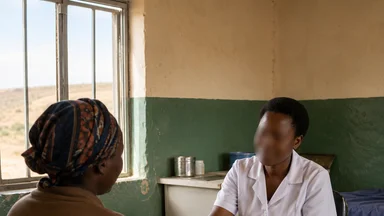
Interviews with primary care doctors and nurses in the Eastern Cape reveal a mix of caution and inertia. Many have been treating TB with the same regimen for years and are skeptical of new drugs. “We've seen so many changes that later got reversed,” said one nurse who asked not to be named. “Remember the injectable-free regimen for MDR-TB? It took years to get used to.” The shorter regimen for drug-susceptible TB is a less dramatic shift, but it still requires unlearning old habits.
Fear of adverse events is a recurring theme. Although trial data show comparable safety, clinicians worry about hepatotoxicity and QT prolongation in their patients, many of whom have underlying conditions like HIV or alcohol use disorder. Without local pharmacovigilance data, they feel exposed. “If a patient develops liver failure on a new drug, I'm the one who has to explain it to the family,” said Dr. Mkhize. “I need more than a WHO recommendation to feel comfortable.”
Lack of updated clinical decision support tools compounds the problem. In many clinics, the only TB treatment guidelines available are from 2018. Electronic health records still default to the six-month regimen. One doctor in a rural clinic in the Eastern Cape said she had heard about the shorter regimen from a colleague but had no idea how to prescribe it. “There's no algorithm, no dosing chart. I'd have to look it up on my phone, and the network is bad.”
The slow pace of change is not unique to South Africa. Similar delays have been observed in other high-burden countries like India and Indonesia. But South Africa's well-organized National TB Programme and its history of successful antiretroviral rollout suggest that faster adoption is possible. The question is political will and resource allocation.
Patient Experience: Defaults and Loss to Follow-Up
For patients, the difference between a four-month and a six-month regimen can be life-changing. TB treatment is burdensome: daily pills, frequent clinic visits, and side effects like nausea, hepatitis, and peripheral neuropathy. In South Africa, default rates for the six-month regimen are estimated at roughly 15% in some cohorts, according to a 2023 study in the International Journal of Tuberculosis and Lung Disease. Patients who default not only risk relapse and drug resistance but also continue to spread the infection.
Data on default rates for the four-month regimen in South Africa are limited but emerging. A 2024 implementation study in the Western Cape, published in the South African Medical Journal, followed 340 patients started on the shorter regimen and found a default rate of 8.2%, compared with 14.5% in a matched cohort on standard therapy. The study also reported that 91% of patients on the shorter regimen completed treatment within four months, versus 84% on standard therapy within six months. These figures suggest that the shorter regimen's adherence benefit observed in trials is replicable in routine settings, albeit with careful monitoring.
Community health workers in the Eastern Cape report that patients on the shorter regimen are less likely to default. “They see the end in sight,” said one health worker. “With six months, many lose hope after two or three months.” However, because the shorter regimen is still rare, these observations are anecdotal. Systematic data on default rates for the four-month regimen in South Africa are not yet available.
Side effects remain the most common reason patients stop treatment. Nausea and joint pain are frequent with standard therapy, and the shorter regimen may cause similar issues. Some patients also report headache and dizziness with rifapentine. In the STREAM trial, adverse events leading to discontinuation were similar between arms, but patients in the shorter arm had slightly higher rates of QT prolongation, which requires monitoring. In resource-limited settings, electrocardiograms are not always available.
Despite these challenges, patients who have completed the shorter regimen express relief. “I finished in four months and felt great,” said a patient in a pilot program in the Western Cape. “My friend is still on the old one and struggling.” The patient's experience underscores the potential benefit, but until clinics can offer the regimen widely, such stories remain exceptions.
The slow adoption also affects efforts to reduce loss to follow-up. A shorter treatment duration is one of the most effective strategies to improve adherence, as shown in other diseases like hepatitis C. In TB, the evidence is clear: shorter regimens reduce defaults. Yet the gap between evidence and practice persists, driven by the operational and cultural barriers described above.
Policy Levers to Accelerate Adoption
South Africa's National TB Programme is due to review its guidelines in mid-2026, which could accelerate adoption. The review is expected to formally incorporate the shorter regimen into the Essential Medicines List and to issue a national directive for phased implementation. But policy alone is not enough. The WHO prequalification of rifapentine, expected in 2025, may ease procurement by allowing generic manufacturers to supply the drug at lower cost.
Targeted training and implementation research are critical. The National TB Programme, with support from partners like the Clinton Health Access Initiative, has begun developing training modules for clinicians. But these need to reach frontline workers, not just provincial coordinators. Simplified dosing fixed-dose combinations, such as a single tablet containing rifapentine, moxifloxacin, isoniazid, and pyrazinamide, could reduce errors and improve adherence. Such combinations are in development but not yet available.
Lessons from the rapid rollout of antiretroviral therapy (ART) in South Africa could inform the TB strategy. In the early 2000s, the country overcame political and logistical hurdles to become the world's largest ART program. Key factors included strong political commitment, civil society advocacy, and simplified treatment protocols. A similar push for the shorter TB regimen could draw on these experiences. However, TB lacks the same level of activism and funding, and the disease is often stigmatized.
Another lever is the use of implementation science to generate local evidence. Pilot programs in the Western Cape and KwaZulu-Natal are collecting data on effectiveness and safety in routine settings. If these data confirm the trial results, they could reassure clinicians and policymakers. The challenge is to scale up such pilots quickly, before the 2026 review.
The Cost of Delay: Projected Impact on TB Control
Modelling by researchers at the University of Cape Town suggests that a two-year delay in nationwide adoption could result in roughly 15,000 additional TB cases and 3,000 excess deaths, assuming a 5% reduction in default rates with the shorter regimen. These projections are uncertain but illustrate the scale of the missed opportunity.
Drug resistance is not expected to increase directly with the shorter regimen, since it is used only for drug-susceptible TB. However, defaults from the longer regimen can lead to acquired resistance, which then requires more expensive and toxic second-line treatment. The economic burden on the health system remains high: treating a case of drug-susceptible TB costs about US$ 300–500, while multidrug-resistant TB costs ten times that. Reducing defaults through shorter treatment could save millions of dollars annually.
Patient lives are at stake. TB remains one of the top infectious disease killers globally, and South Africa accounts for a disproportionate share of deaths. The WHO's End TB Strategy aims for a 90% reduction in TB deaths by 2030 compared with 2015 levels. Without faster adoption of shorter regimens, that target will be difficult to reach.
Looking forward, the next steps depend on coordinated action. The National TB Programme must secure rifapentine supply, update clinical guidelines, and roll out training. Clinicians need local safety data and decision support. Patients need access to the shorter regimen without delay. The gap between evidence and practice is narrowing, but how quickly that gap closes will determine whether thousands of preventable deaths occur. The tools exist; the challenge is implementation.
This article is a journalistic analysis and does not replace professional medical consultation. Patients should consult their healthcare provider for treatment decisions.