UK Newborn Pulse Oximetry Screening Misses Critical Congenital Heart Defects
When a newborn passes the pulse oximetry screen, parents and clinicians breathe a sigh of relief. The test is quick, non-invasive, and has been hailed as a simple way to detect critical congenital heart defects (CCHD) before a baby leaves hospital. But the evidence tells a more sobering story: the screening test misses around one in four critical defects. In the UK, where the programme was rolled out nationally in 2014, approximately 200 infants each year may be discharged with a normal result only to collapse days later with a duct-dependent circulation. The gap between what the test can do and what we expect it to do has become a quiet controversy in paediatric cardiology.
A Screening Test with a Blind Spot
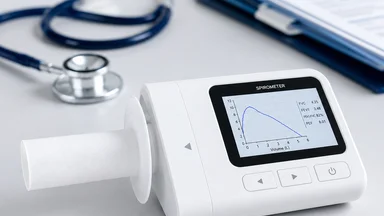
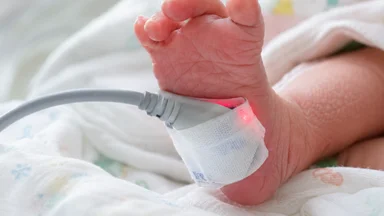
Pulse oximetry screening for CCHD works by measuring oxygen saturation in the blood. In healthy newborns, saturations are above 95%. In many critical defects, saturations fall below 90–95%, triggering a referral. But the test's sensitivity—its ability to correctly identify babies who actually have a critical defect—is far from perfect. A large meta-analysis published in The Lancet in 2022 pooled data from 21 studies and estimated a pooled sensitivity of 76.3%. That means roughly 24% of infants with critical CCHD are not flagged by the screen.
Certain defects are especially prone to being missed. Coarctation of the aorta, a narrowing that can cause sudden collapse when the ductus arteriosus closes, often presents with normal saturations in the first hours of life. Total anomalous pulmonary venous return (TAPVR), where the pulmonary veins drain abnormally, may also maintain normal oxygen levels at rest. These are among the most dangerous lesions to miss because they can lead to rapid deterioration.
The UK National Screening Committee reviewed the evidence before launching the programme and acknowledged these limitations. Pilot studies had shown sensitivity around 75–80%, and the committee judged that even an imperfect test would save lives. But for the families of babies who slip through, the distinction between 'imperfect' and 'failed' is academic.
Disagreement among paediatric cardiologists over screening thresholds adds another layer. Some argue that lowering the pass threshold from 95% to 90% would catch more cases, but at the cost of more false positives and unnecessary echocardiograms. Others contend that the test should be repeated at 24–48 hours, when saturations may drop in duct-dependent lesions. No consensus has emerged.
Physiology of Missed Defects and Evidence on Sensitivity
The physiology of missed defects is well understood. In coarctation of the aorta, the narrowing is distal to the left subclavian artery, so pre-ductal saturations (right hand) may be normal while post-ductal saturations (foot) are low. But the standard screening protocol measures both, and if the difference is subtle—say, 96% in the hand and 93% in the foot—it may not trigger the alarm. Many protocols use a threshold of 3% difference, but some clinicians argue this is too wide.
Right-sided heart lesions, such as tetralogy of Fallot with mild obstruction, can also maintain normal saturations at rest. The defect only becomes critical when the ductus arteriosus closes, which may happen after screening. Timing is everything: babies discharged early, before 24 hours of life, are screened at a point when the ductus is still patent and saturations are artefactually normal.
Device calibration and operator technique introduce further variability. A study in Archives of Disease in Childhood reported false-negative rates as high as 20% in some UK regions, with variation linked to the type of oximeter used and whether the baby was quiet or crying. The American Heart Association recommends screening after 24 hours of life, but the UK National Screening Committee allows screening as early as 4 hours, which may reduce sensitivity.
The 2022 Lancet meta-analysis remains the most comprehensive assessment of pulse oximetry screening. It included over 400,000 newborns and found a pooled sensitivity of 76.3% (95% CI 69.5–82.0). Specificity was high at 99.9%, meaning false positives are rare, but because the prevalence of CCHD is low (about 2 per 1,000 live births), even a 0.1% false-positive rate generates many unnecessary echocardiograms.
Data from Sweden and Germany show similar miss rates despite different protocols. Sweden screens at 24–48 hours and uses a lower threshold (90% for pass), yet sensitivity remains around 78%. Germany screens twice, at 6–12 hours and again at 24–48 hours, and still reports a miss rate of approximately 20%. This suggests that the problem is not simply a matter of protocol but of biology: some defects simply do not produce hypoxemia in the first days of life.
The UK National Institute for Health and Care Research funded a prospective audit in 2023 to examine real-world performance. Preliminary results, presented at the British Congenital Cardiac Association meeting in 2025, indicate that sensitivity varies by gestational age and birth weight. Preterm infants and those with low birth weight had higher false-negative rates, possibly because their baseline saturations are lower and the threshold is not adjusted. The audit included over 50,000 newborns across 15 NHS trusts, and the preliminary data showed an overall sensitivity of 74.2%, with rates as low as 68% in preterm infants born before 37 weeks. These findings have reignited debate about whether the current screening programme is adequate. Some argue that it is, given that no test is perfect and that the programme still detects the majority of cases. Others point out that for a condition where delayed diagnosis can be fatal, a 24% miss rate is unacceptable.
The Harms of False Reassurance
The most direct harm of a false-negative screen is delayed diagnosis. Instead of being identified in the nursery, the baby presents to an emergency department in shock, with acidosis and respiratory distress. By then, the window for elective surgery has closed, and the infant may require emergency intervention with higher risk of complications.
Parental trust in a 'passed' test can override clinical intuition. A mother who notices her baby is feeding poorly or breathing fast may be reassured by the memory of a normal screen and delay seeking help. The Children's Heart Federation has collected testimonies from parents who were told their baby 'passed with flying colours' only to collapse days later. 'I kept saying something was wrong, but the midwife pointed to the screening result,' one parent recounted.
Medicolegal cases are rising in both the UK and US. Solicitors specialising in birth injury report an increasing number of claims where the screen was normal but the baby had a critical defect. The argument is not that the test should have detected every case, but that clinicians failed to act on other warning signs. A normal screen does not rule out CCHD, yet the message to parents often implies it does. In the UK, the number of clinical negligence claims related to missed CCHD has increased from an average of 5 per year before 2014 to over 20 per year in 2023, according to data from NHS Resolution. Settlements have ranged from £50,000 to over £1 million, depending on the severity of neurological injury.
In emergency departments, infants with missed CCHD often undergo prolonged workups for sepsis before the cardiac diagnosis is made. One study found that babies with critical coarctation spent an average of 4 hours in the ED before a cardiology consult was called, compared with 1 hour for those detected by screening. This delay can be critical: each hour of shock increases the risk of brain injury and multi-organ failure.
Clinicians Who Push Back on Universal Screening
Not all paediatric cardiologists are convinced that universal pulse oximetry screening is the best use of resources. A vocal minority argues for targeted screening: routine echocardiography for high-risk groups, such as infants with a family history of CHD, those with genetic syndromes, or those born to mothers with diabetes. They point out that echocardiography is definitive and can detect all critical defects, not just those that cause hypoxemia. However, the cost and feasibility of universal echocardiography are prohibitive: an echocardiogram costs roughly £200 per baby, compared with less than £1 for pulse oximetry. Even targeted screening would require significant investment in ultrasound equipment and trained sonographers.
Others advocate for a second screen at 24–48 hours of life, especially for babies discharged early. The Royal College of Paediatrics and Child Health updated its guidelines in 2025 with cautionary language, stating that 'a normal pulse oximetry screen does not exclude critical congenital heart disease' and advising clinicians to maintain a high index of suspicion. The guidelines stop short of recommending routine repeat screening, citing cost and logistics. A pilot study in three NHS trusts that implemented a second screen at 24 hours found that it detected an additional 15% of CCHD cases, but also increased the false-positive rate from 0.1% to 0.3%, leading to more echocardiograms and parental anxiety.
Neonatologists debate the cost-effectiveness of adding clinical decision support tools. Some hospitals have integrated the screening result into electronic health records with alerts for borderline saturations (90–95%) or for babies with risk factors. But these systems are not standardised, and their impact on outcomes is unproven. A 2024 study in BMJ Quality and Safety found that electronic alerts reduced the time to cardiology referral by an average of 2 hours, but did not significantly reduce the rate of missed diagnoses.
No consensus exists on whether to screen in community midwifery settings. In the UK, many home births and early discharges mean that screening is performed by midwives in the community, where equipment and training may vary. A 2024 survey found that 30% of community midwives felt inadequately trained to interpret the results, and 15% did not have access to a paediatric cardiology hotline for advice. This is particularly concerning given that home births account for approximately 2% of all births in England, and the rate is rising.
Closing the Gap: Practical Next Steps
Several strategies have been proposed to improve detection. One is the addition of a hyperoxia test, where the baby breathes 100% oxygen for 10 minutes and the saturation response is measured. In healthy infants, saturations rise to 100%; in those with duct-dependent lesions, they may not. The test is more sensitive but requires additional equipment and time, and is not currently part of the UK protocol. A feasibility study in two London hospitals found that the hyperoxia test increased sensitivity to 89%, but prolonged the screening process by 15 minutes and required a doctor to administer oxygen.
Another approach is repeat screening for borderline saturations. Some hospitals have adopted a policy of repeating the screen at 12–24 hours for any baby with saturations between 90% and 95%. This catches some cases that would otherwise be missed, but it also increases the false-positive rate and parental anxiety. A cost-effectiveness analysis presented at the 2025 BCCA meeting suggested that repeat screening for borderline cases would be cost-effective at a threshold of £20,000 per quality-adjusted life year, but the model was sensitive to assumptions about parental anxiety and follow-up rates.
Integration with electronic health record alerts is a low-cost intervention. If a baby with a normal screen is later noted to have poor feeding or tachypnoea, the system could flag the discrepancy. But such alerts depend on accurate data entry and clinical follow-up, which are not always reliable. A 2023 audit at a large teaching hospital found that only 60% of babies with borderline saturations had a documented plan for follow-up, and 10% were lost to follow-up entirely.
Training for midwives and junior doctors on recognizing CCHD signs despite normal oximetry is essential. Many clinicians are unaware that a normal screen does not rule out disease. The British Congenital Cardiac Association has developed a one-page clinical decision aid that lists red flags—such as weak femoral pulses, differential cyanosis, or a murmur—and advises when to refer regardless of the screen result. A pilot study of the decision aid in four NHS trusts found that it increased appropriate referrals by 30% and reduced time to diagnosis by an average of 6 hours.
Parent education leaflets are being redesigned to emphasize that a pass is not a guarantee. The UK National Screening Committee now recommends that parents be told, 'Your baby's screen was normal, but if you notice any of these signs, seek medical help immediately.' The message is more honest but may also increase anxiety. A survey of 500 parents found that 70% preferred the new wording, but 25% reported feeling more worried after reading it. Balancing transparency with reassurance remains a challenge.
When a 'Normal' Result Is Not Enough
Consider the case of a full-term infant born in a London hospital in 2023. The baby passed pulse oximetry at 6 hours of life with saturations of 96% in the right hand and 94% in the foot—a 2% difference, within the acceptable range. The mother was discharged the next day. On day 5, the baby became pale and lethargic, then collapsed. Paramedics found a moribund infant with no palpable pulses. In the paediatric intensive care unit, an echocardiogram revealed critical coarctation of the aorta with a closed ductus. After emergency surgery, the baby survived but with prolonged hospitalisation and some neurological impairment. The family later filed a claim against the hospital, arguing that the 2% difference should have triggered a repeat screen or an echocardiogram. The case was settled out of court for £150,000.
Parent testimonies collected by the Children's Heart Federation echo this pattern. 'They told us the test was normal, so we didn't worry,' one father said. 'We wish we had known it could be wrong.' The federation has called for mandatory disclosure of the test's limitations as part of the consent process for screening. Currently, the NHS screening information leaflet includes a statement that 'the test is not 100% accurate,' but parents are not routinely asked to sign a consent form. The federation argues that informed consent is impossible without a clear explanation of the false-negative rate.
The screening programme is considered 'universal' but not comprehensive. It is the best available tool for mass screening, but it is not diagnostic. The gap between what the test can do and what the public expects it to do is a communication failure as much as a technical one. Clinicians must be trained to say, 'Your baby passed the screen, but here are the signs that should still prompt a call.'
Shared decision-making between clinicians and families is the ideal, but it is difficult to achieve in the busy postnatal ward. A 2025 study found that only 40% of parents recalled being told about the possibility of a false negative. The rest assumed that a normal result meant their baby's heart was fine. This suggests that the current counselling practices are inadequate, and that more structured communication tools, such as videos or decision aids, may be needed.
This article is for educational purposes only and does not replace professional medical advice. Always consult a qualified healthcare provider for any health concerns.